


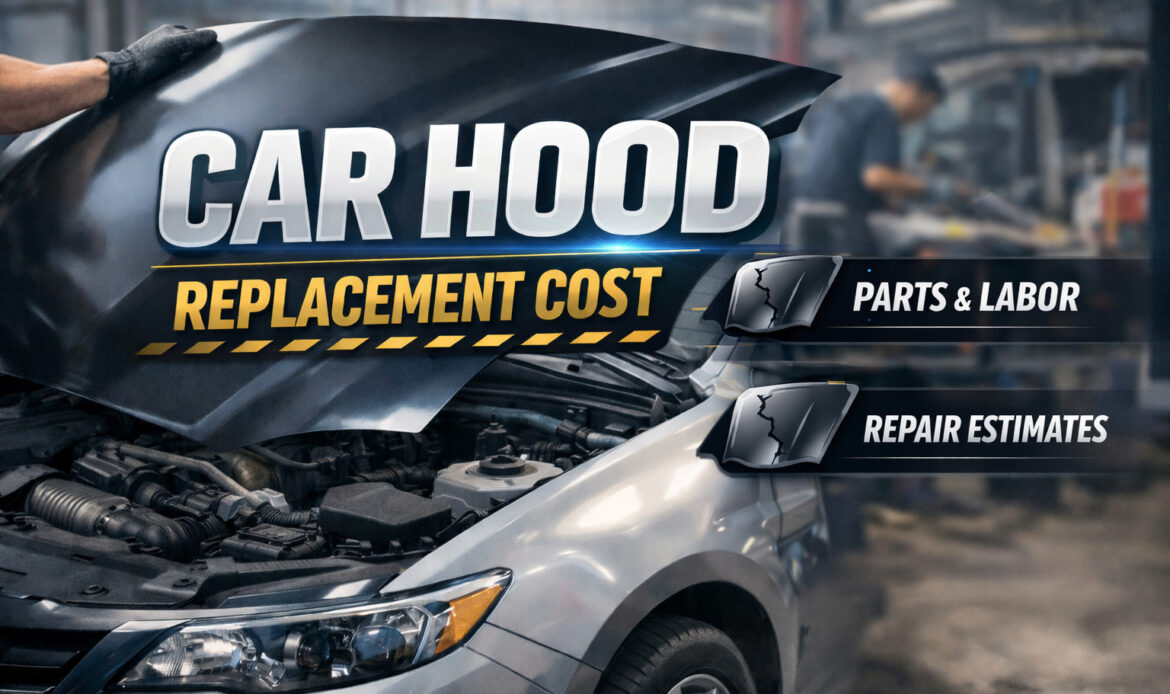
Car hood replacement cost depends on several factors such as vehicle type, material, labor, and paint work. Many vehicle owners expect a fixed price, but actual costs vary after a proper inspection.
In most cases, technicians evaluate both visible and hidden damage before giving a final estimate. That is why online averages often do not match real repair bills.
Quick Answer: Car Hood Replacement Cost
The average cost typically falls between $300 and $2,500+, depending on the vehicle and repair complexity.
-
Economy cars: $300 – $900
-
Mid-range vehicles: $800 – $1,500
-
Luxury vehicles: $1,500 – $2,500+
👉 Final pricing depends on parts, labor, paint, and hidden damage.
When Does a Car Hood Need Replacement?
Not every damaged hood needs to be replaced. Minor dents and scratches can often be repaired without major work.
However, replacement becomes necessary when the structure of the hood is affected. Severe impact, deep creases, or repeated repairs can weaken the metal and compromise safety. In such cases, repair is not a reliable option.
Technicians also check alignment and functionality. If the hood does not close properly or sits unevenly, it usually indicates deeper structural issues that require replacement.
Structural Damage vs Cosmetic Damage
Understanding the difference helps in making the right decision.
Cosmetic damage includes small dents, scratches, or paint chips. These issues only affect appearance and can usually be repaired.
Structural damage, on the other hand, affects how the hood functions. Misalignment, latch issues, or internal damage can impact safety and performance. Even small structural problems can lead to bigger issues over time.
Hidden Damage That Many Owners Miss
Many vehicle owners focus only on visible dents. However, hidden damage is quite common and often discovered during inspection.
Technicians usually check internal components such as hinges, latch systems, and reinforcement areas. A hood that looks repairable from the outside may still require replacement if internal parts are damaged.
What Affects Car Hood Replacement Cost?
Several factors influence the final cost. Understanding them helps set realistic expectations.
Vehicle Type and Material
The type of vehicle plays a major role. Steel hoods are more affordable, while aluminum and carbon fiber increase the cost. Luxury vehicles also require more precise work, which adds to the price.
OEM vs Aftermarket Parts
OEM parts offer better fit and long-term durability. Aftermarket parts are cheaper but may require adjustments during installation.
Labor and Installation
Labor depends on how complex the job is. Some vehicles require removal of additional components and precise alignment, which increases time and cost.
Paint and Refinishing
Paint matching requires accuracy. Metallic and pearl finishes often need blending with nearby panels, which increases both labor and material costs.
Sensor Calibration
Modern vehicles include sensors and cameras near the hood. These systems may need recalibration after replacement, adding to the total cost.
Average Cost Breakdown
Instead of a fixed number, it is better to understand how the cost is divided:
-
Parts (hood panel)
-
Labor and installation
-
Paint and refinishing
-
Sensor calibration (if required)
👉 Each component contributes to the final bill.
Repair vs Replacement: What Should You Choose?
The decision depends on safety and long-term durability.
If repairing the hood weakens its structure or creates future risks, replacement is recommended. Although repair may seem cheaper initially, it may not last long in cases of serious damage.
Insurance companies also consider cost thresholds. If repair costs go beyond a certain limit, replacement is usually approved.
Does Insurance Cover Hood Replacement?
Insurance coverage depends on the cause of damage and policy type.
Collision coverage usually applies to accident-related damage, while comprehensive coverage may apply to hail, falling objects, or vandalism.
However, deductibles affect out-of-pocket costs. In some cases, insurers may suggest repair first, but additional damage found during inspection can change that decision.
How Long Does Hood Replacement Take?
The process takes time because multiple steps are involved. It starts with inspection and parts ordering, followed by installation and painting.
Paint curing and quality checks are also important to ensure durability and proper finish. While simple replacements may be completed in a day, most cases take a few days.
Common Mistakes to Avoid
Many vehicle owners unintentionally increase repair costs. Avoid these common mistakes:
-
Driving with a misaligned hood
-
Ignoring latch or closing issues
-
Choosing the cheapest estimate without inspection
-
Delaying repairs
👉 These mistakes can lead to higher costs and safety risks.
What to Expect During the Replacement Process
A professional hood replacement follows a structured approach:
-
Inspection and estimate
-
Parts ordering
-
Removal of damaged hood
-
Installation of new hood
-
Alignment adjustments
-
Painting and finishing
-
Final inspection and delivery
👉 Each step ensures proper fit, safety, and long-term durability.
Final Thoughts
Car hood replacement cost varies based on vehicle type, damage severity, and repair complexity. A proper inspection is the only way to get an accurate estimate.
Choosing experienced technicians ensures better safety, correct alignment, and long-lasting results.
About Alpha Collision Center
Alpha Collision Center is a professional auto body repair shop near Boston, MA. Every repair starts with a detailed inspection to identify both visible and hidden damage.
Experienced technicians handle hood replacement, structural repairs, refinishing, and advanced vehicle systems using industry-approved methods. The focus remains on safety, accuracy, and high-quality results.