


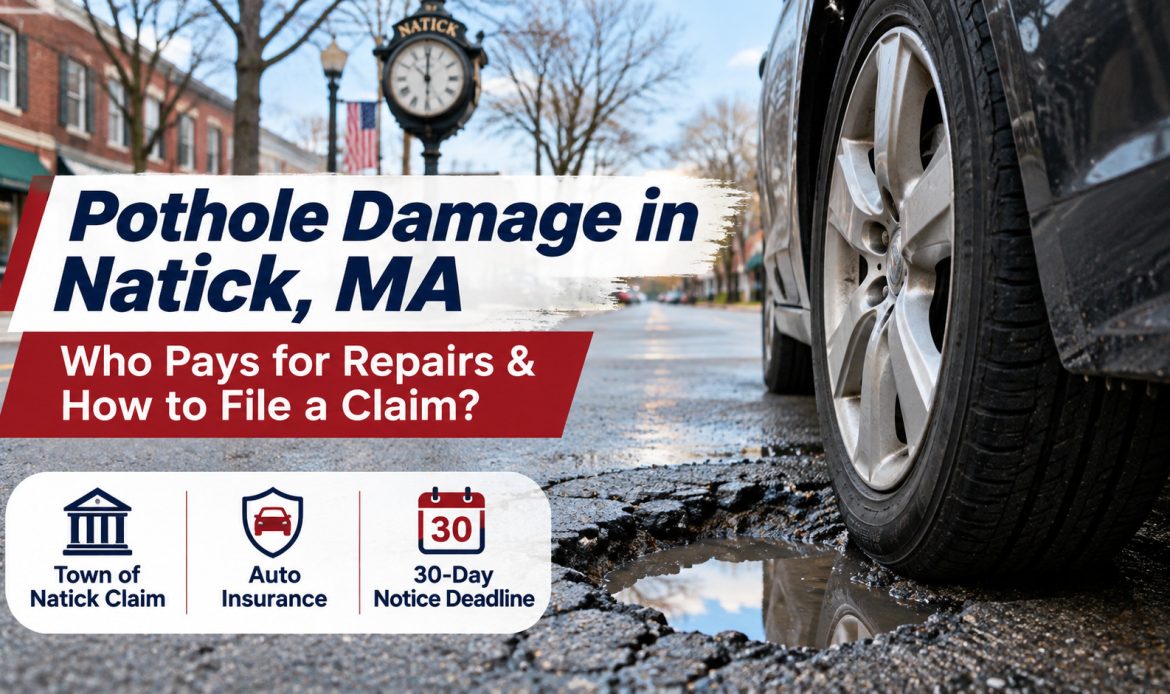
Driving through Natick, you don’t always have time to spot a pothole before your tires hit it. One rough patch in the road can turn an ordinary drive into an unexpected problem. Potholes often develop after repeated exposure to rain, freezing temperatures, and everyday traffic, making them a common concern for Massachusetts drivers.
If you hit a pothole and notice something wrong with your vehicle, you may wonder who should cover the repair costs. Can you hold the Town of Natick responsible, or should you turn to your auto insurance? Understanding your options can help you make informed decisions after an incident. In this guide, we’ll explain what Natick drivers should know about pothole damage claims and where to start.
The Short Answer
- The town: You can file a vehicle damage claim with the Town of Natick, but the town must receive written notice within 30 days of the incident.
- Your insurer: Collision coverage generally pays for pothole damage, minus your deductible.
- Either way: Photos, exact location details, and an itemized repair estimate make your claim far stronger.
How Potholes Can Damage Your Vehicle
Hitting a pothole can do more than make your vehicle shake for a moment. The impact can affect several components, depending on the pothole’s depth, the vehicle’s speed, and the angle at which the tires strike the road. Some damage is immediately noticeable, while other problems may become apparent after driving for a while. Here are some common types of pothole damage Natick drivers should know about.
Tire Punctures, Sidewall Damage, and Blowouts
Your tires take the direct impact when you drive over a pothole. Sharp edges can pinch the tire against the wheel, causing punctures, cuts, or internal structural damage. You may also notice a bulge on the sidewall, which indicates damage to the tire’s internal structure. In more severe cases, the tire can suddenly lose air or suffer a blowout. Even if it continues to hold air, a damaged tire may no longer be safe to drive on.
Bent or Cracked Wheels and Rims
A hard impact can damage the wheels beneath your tires. Aluminum alloy wheels, in particular, can bend or crack when they strike the edge of a deep pothole. A bent rim may prevent the tire from maintaining a proper seal, leading to gradual air loss. You might also feel vibrations through the steering wheel or notice that your vehicle doesn’t ride as smoothly as before.
Wheel Alignment Problems
Potholes can knock your wheels out of their proper alignment. When this happens, your vehicle may start pulling to the left or right, even when you’re holding the steering wheel straight. You might also notice uneven tire wear or a steering wheel that sits at an unusual angle. If left uncorrected, poor alignment can affect handling and shorten tire life.
Suspension and Steering Damage
Your suspension system absorbs road impacts and helps keep your tires in contact with the pavement. A strong pothole strike can bend or damage components such as control arms, tie rods, ball joints, shocks, and struts. These problems can make your vehicle feel unstable, produce knocking sounds, or cause excessive bouncing over uneven roads. Damage to steering components can also make it harder to maintain proper control.
Underbody and Exhaust System Damage
Deep potholes can expose the underside of your vehicle to direct impact. Depending on the vehicle’s ground clearance, the impact may damage the exhaust pipes, muffler, catalytic converter, oil pan, or protective panels underneath the car. Scraped or dented exhaust components can create unusual noises, while oil pan damage may cause fluid leaks. These problems can affect vehicle performance and require prompt attention.
Bumper and Other Exterior Damage
A sudden drop into a deep pothole can cause the lower bumper, front air dam, side skirts, and other exterior components to scrape against the road. Plastic panels may crack, while mounting clips and brackets can break loose. Vehicles with lower ground clearance are particularly vulnerable to this type of damage. Although some marks may look cosmetic, broken mounts or loose panels can require proper bumper repair to restore their original fit.
| Component | Common Signs | Why It Matters |
|---|---|---|
| Tires | Sidewall bulge, cuts, air loss | Blowout risk, even if the tire holds air |
| Wheels / Rims | Vibration, slow leaks, visible bends | Tire may not seal properly |
| Alignment | Pulling, off-center steering wheel | Uneven tire wear, poorer handling |
| Suspension / Steering | Clunking, bouncing, loose steering | Reduced stability and control |
| Underbody / Exhaust | Rattling, louder exhaust, fluid leaks | Oil pan or exhaust damage can worsen |
| Bumper / Exterior | Scrapes, cracks, loose panels | Broken clips and mounts affect fit |
A note for drivers: Pothole damage isn’t always visible from the outside. A tire may have internal damage, or a suspension component may be bent without an obvious sign. If your vehicle feels different after a pothole impact, have it inspected rather than assuming everything is fine.
How to File a Pothole Damage Claim in Natick
Filing a pothole damage claim takes some preparation, especially when you need to show how the road condition affected your vehicle. Whether you plan to seek compensation from the Town of Natick or use your auto insurance, having clear documentation can make the process easier. Here are the steps Natick drivers can follow when preparing a claim.
1. Document the Pothole and Vehicle Damage
Start by documenting what happened. Write down how you encountered the pothole and what you noticed immediately afterwards. Check the affected tires, wheels, and other visible parts of your vehicle.
Keep any damaged parts or repair records if available. If you notice additional problems during a vehicle inspection, ask the repair shop to include them in its assessment. Clear documentation helps establish a connection between the road incident and the reported damage.
2. Take Pictures of the Accident Location
Photographs can help show the condition of the road and the damage to your vehicle. If it is safe to do so, take pictures of the pothole from different angles. Include nearby street signs, intersections, or recognizable landmarks to help identify the location.
Also photograph any visible damage to your tires, wheels, bumper, or other affected areas. Avoid standing in traffic or putting yourself at risk to capture these images.
3. Record the Date, Time, and Exact Location
Write down the date and approximate time of the incident while the details are still fresh. Record the street name, direction of travel, nearest intersection, and any other information that helps pinpoint the pothole.
If you reported the road condition to the town or spoke with a public works employee, keep a record of that communication. These details can help when the town or insurance company reviews your account.
4. Obtain a Repair Estimate
Have a qualified auto body or repair shop inspect your vehicle and prepare an itemized estimate. Ask the shop to identify the damaged components and explain which repairs relate to the pothole impact.
Keep copies of the estimate, inspection findings, invoices, and receipts. Natick’s vehicle damage claim form asks applicants to provide an estimated repair cost and identify the source of the estimate. You can also attach supporting documents to the form.
5. Submit Your Claim to the Natick Town Clerk’s Office
If you want to seek compensation from the town, you can submit a vehicle damage claim through Natick’s official online form. The form asks for your contact details, vehicle information, incident location, date, time, description of the incident, and estimated repair costs.
Natick also accepts claims through the Town Clerk’s office. According to the town’s published procedure, the office forwards submitted claims to the Town Administrator/Select Board’s office for further handling.
Include your photographs, repair estimate, and any relevant supporting documents with your submission. Keep a copy of everything for your records.
6. Follow Up With Your Insurance Representative
If you have also notified your auto insurance company, stay in touch with your assigned claims representative. They can explain the next steps, arrange an inspection if needed, and tell you what documentation they require.
Keep records of conversations, claim numbers, emails, and any repair approvals. If the insurer requests additional photographs or paperwork, provide them promptly to avoid unnecessary delays.
Your Pothole Claim Checklist
- ✓ Photos of the pothole (multiple angles, with landmarks)
- ✓ Photos of all visible vehicle damage
- ✓ Date, time, street, direction of travel, nearest intersection
- ✓ Itemized repair estimate from a qualified shop
- ✓ Invoices, receipts, and any damaged parts
- ✓ Copies of every form and message you send
Massachusetts’ 30-Day Notice Deadline for Pothole Claims
If you plan to seek compensation from the Town of Natick for pothole damage, don’t wait too long to submit your claim. Massachusetts has a specific notice requirement for property damage caused by defects in public roads. Missing this deadline can affect your ability to pursue compensation.
Under Massachusetts General Laws, Chapter 84, Section 18, anyone seeking damages for an injury or property loss caused by a defective public road must generally notify the responsible municipality within 30 days of the incident. The notice must identify the affected person’s name and residence, along with the time, place, and cause of the damage.
Natick follows this requirement in its own claims procedure. According to the town’s official website, it must receive claims involving road defects, sidewalk defects, or personal property damage within 30 days from the incident date.
What Does the 30-Day Deadline Mean for Natick Drivers?
For example, suppose you hit a pothole on a Natick road on November 5 and your vehicle sustains damage. You should make sure the town receives your written notice within the applicable 30-day period. Simply reporting the pothole for road maintenance isn’t the same as submitting a damage claim.
Massachusetts General Laws, Chapter 84, Section 19, also specifies who can receive written notice on behalf of a town. This includes the Town Clerk, a Select Board member, or the Town Treasurer.
| Requirement | What It Means |
|---|---|
| Deadline | Written notice within 30 days of the incident |
| What to Include | Your name and residence, plus the time, place, and cause of the damage |
| Who Can Receive It | Town Clerk, a Select Board member, or the Town Treasurer |
| What Doesn’t Count | A road maintenance report or a claim filed only with your insurer |
Don’t Wait Until You Have Your Final Repair Bill
You don’t necessarily need to wait until every repair is complete before giving notice. The law focuses on timely notice of the incident and the resulting damage. You can provide an initial written notice with the required information and retain additional repair documentation for later.
Natick provides an official Insurance Claims page with its filing procedure and claim forms. Review the instructions carefully and confirm that your notice reaches the appropriate town office before the deadline.
A word of caution: Don’t assume that submitting a claim to your auto insurance company satisfies the town’s separate notice requirement. If you intend to pursue a municipal claim, handle that notice independently. Acting promptly can help protect your options.
Legal references: Massachusetts General Laws, Chapter 84, Section 18 · Chapter 84, Section 19 · Town of Natick – Insurance Claims.
What If the Town Rejects Your Pothole Damage Claim?
Not every pothole damage claim results in reimbursement. The Town of Natick may reject a claim if the available evidence doesn’t establish municipal responsibility or the incident doesn’t meet the requirements under Massachusetts law. Receiving a denial can be frustrating, especially when you’ve already paid for vehicle repairs. However, it doesn’t necessarily mean you have no other options.
Here are a few things you can consider if the town declines your claim.
Check Your Auto Insurance Coverage
If the town rejects your claim, review your auto insurance policy to see whether you have collision coverage. This coverage generally pays for vehicle damage caused by hitting an object, including a pothole, subject to your policy terms.
Comprehensive coverage usually doesn’t apply to pothole impact damage. Liability-only coverage also won’t pay for repairs to your own vehicle.
Contact your insurance provider and explain what happened. The representative can review your policy and tell you whether the damage qualifies for coverage.
| Coverage Type | Covers Pothole Damage? |
|---|---|
| Collision | Generally yes, subject to your deductible and policy terms |
| Comprehensive | Usually no, as it doesn’t typically cover impact damage |
| Liability Only | No, as it doesn’t pay for repairs to your own vehicle |
Consider Your Insurance Deductible
Before opening an insurance claim, compare your estimated repair expenses with your deductible.
For example, suppose your vehicle needs $1,500 in repairs and your collision deductible is $500. If your insurer approves the full repair amount, you would generally pay $500, while the insurer covers the remaining $1,000.
| Approved repair cost | $1,500 |
| Your collision deductible | − $500 |
| Insurer pays | $1,000 |
If the repair cost is close to your deductible, paying out of pocket may make more financial sense. Ask your insurance representative how filing a claim could affect your policy before making a decision.
Keep Your Supporting Documents
If you believe the town reached the wrong decision, keep all the paperwork related to your original claim. This includes:
- The town’s written denial or response.
- Photographs of the pothole and vehicle damage.
- Repair estimates, invoices, and payment receipts.
- Any correspondence with the town or its insurance company.
- Inspection reports from your repair shop.
Ask the town or its insurance representative to explain the reason for the denial. Review that explanation carefully to understand whether the disagreement concerns road maintenance, municipal responsibility, or evidence linking the pothole to your vehicle damage.
Consider Seeking Legal Advice
If your vehicle has suffered substantial damage and you believe the town should be responsible, consider speaking with a Massachusetts attorney who handles municipal liability or road-defect claims.
An attorney can review the circumstances, examine the denial, and explain whether you have grounds to challenge the decision or pursue another legal option. This may be particularly useful when the repair expenses are significant or the town disputes its responsibility.
Remember: A rejected municipal claim doesn’t automatically establish that your insurance company must pay. Each insurer reviews coverage under the terms of its policy, while municipal liability follows separate legal requirements.
Research sources: Mass.gov – Massachusetts Law About Potholes and Road Defects · Mass.gov – Auto Insurance Claims FAQs · Massachusetts Consumer Bill of Rights for Automobile Insurance · Mass.gov – Basics of Auto Insurance.
When Should You Have Your Vehicle Inspected After Hitting a Pothole?
Not every pothole impact causes immediate or visible damage. Sometimes, your vehicle may continue driving normally, even when a tire, wheel, or suspension component has been affected. Paying attention to changes in how your car handles can help you recognize a problem before it gets worse.
If you notice any of the following warning signs after hitting a pothole, consider having your vehicle inspected by a qualified repair professional.
Unusual Vibrations While Driving
If your steering wheel, seat, or floorboard starts vibrating after a pothole impact, don’t ignore it. The impact may have bent a wheel, damaged a tire, or affected a suspension component. You might notice the vibration more clearly at higher speeds. A professional inspection can help identify the source rather than leaving you to guess.
Your Vehicle Pulls to One Side
Does your car drift left or right when you’re trying to drive straight? A pothole impact may have affected your wheel alignment or damaged a steering component. You might also notice that the steering wheel no longer sits straight. Have the vehicle checked, particularly if the pulling continues on a smooth, level road.
Bulges or Cuts on Your Tires
Take a close look at your tires after a hard pothole impact. A bulge or bubble on the sidewall can indicate internal tire damage, even if the tire hasn’t lost air. You may also notice cuts, cracks, or a gradual drop in tire pressure. A tire with a sidewall bulge can be unsafe to drive on and should be replaced promptly.
Unusual Suspension Noises
Listen for new sounds when driving over small bumps, turning, or going over uneven pavement. Clunking, knocking, rattling, or squeaking noises may point to damage involving shocks, struts, control arms, or other suspension components. These sounds shouldn’t be dismissed as ordinary road noise, particularly when they begin immediately after hitting a pothole.
When Should You Stop Driving?
Some warning signs require more attention than others. If you notice a tire bulge, rapid air loss, severe vibration, or difficulty controlling the steering, find a safe place to stop. Avoid continuing your journey if you suspect the vehicle is unsafe. Arrange roadside assistance or towing if necessary.
| Warning Sign | What to Do |
|---|---|
| Tire bulge, rapid air loss, severe vibration, or hard-to-control steering | Stop safely and arrange roadside assistance or towing |
| Pulling to one side, off-center steering wheel, new clunking noises | Inspect soon before driving long distances |
| Scraped bumper, loose lower panels, minor cosmetic marks | Schedule an estimate and document the damage for your claim |
Even if your vehicle seems fine immediately after the impact, pay attention to changes over the following days. Some problems become noticeable only after you’ve driven for a while.
Bottom line: Don’t ignore unusual changes in your vehicle’s handling or performance. A timely inspection can help identify hidden problems and prevent further damage. A qualified technician can assess the tires, wheels, alignment, and suspension to determine whether your vehicle needs repairs.
Research references: AAA – Protecting Vehicles from Potholes · Firestone – What to Check After Hitting a Pothole · U.S. Tire Manufacturers Association – Tire Care and Safety Guide.
Get Professional Pothole Damage Repairs in Natick, MA
After hitting a pothole, getting your vehicle back into proper condition takes more than fixing the most visible damage. Bent panels, damaged bumpers, and other exterior issues can affect your car’s appearance and require professional attention. Choosing an experienced auto body shop in Natick can help ensure the repairs receive the attention they need.
At Alpha Collision Center, we help Natick drivers with a wide range of auto body and collision repair needs. Our services include dent and scratch repair, bumper repair, frame straightening, paint refinishing, and vehicle detailing. We work on various makes and models, using modern equipment and repair techniques to restore damaged vehicles.
We also understand that dealing with vehicle damage can be stressful, especially when insurance is involved. Our team works with major insurance providers and helps customers navigate the repair process. We also offer towing assistance when a vehicle cannot be driven to our shop.
Frequently Asked Questions
Can I get the Town of Natick to pay for pothole damage?
You can file a vehicle damage claim with the town through its online form or the Town Clerk’s office. The town reviews whether the evidence establishes municipal responsibility under Massachusetts law, so reimbursement isn’t guaranteed.
How long do I have to file a pothole claim in Natick?
Under M.G.L. Chapter 84, Section 18, the town must generally receive written notice within 30 days of the incident. Natick’s own claims procedure follows the same 30-day window.
Does car insurance cover pothole damage in Massachusetts?
Collision coverage generally pays for pothole damage, subject to your deductible and policy terms. Comprehensive coverage usually doesn’t apply, and liability-only coverage won’t pay for repairs to your own vehicle.
Do I need my final repair bill before notifying the town?
No. The law focuses on timely notice of the incident and damage. You can send an initial written notice with the required details and provide repair documentation later.
Does reporting a pothole count as filing a claim?
No. Reporting a pothole for road maintenance isn’t the same as submitting a damage claim. Filing with your insurer doesn’t satisfy the town’s notice requirement either.
Hit a Pothole? Get a Professional Assessment
If your vehicle has suffered damage after hitting a pothole, visit Alpha Collision Center for a professional assessment and an itemized repair estimate you can use for your claim.
Natick: 47 Summer St, Natick, MA 01760 · (508) 650-2000
Arlington: 30 Park Avenue, Arlington, MA · (781) 646-4611
Get a Free Estimate