


Introduction
Small dents appear on cars more often than drivers expect. A door opened too quickly in a parking lot, a loose shopping cart, or a minor bump while parking can leave a visible mark on a body panel. Hailstorms and falling objects can also create small dents on the hood, roof, or trunk. Even though these dents usually do not affect how the car drives, they make the vehicle look damaged and poorly maintained.
Because of this, many drivers search online to learn how to remove small dents on a car before visiting a repair shop. Some dents can be improved at home when the metal is not sharply creased and the paint remains intact. However, not every dent responds to DIY methods. Understanding the cause of the dent and the type of panel involved helps determine whether a home fix is possible or if professional repair will produce better results.
What Causes Small Dents on a Car
Small dents usually happen during everyday driving situations. Parking lots remain one of the most common places where vehicles receive minor damage. A nearby driver opening a door too quickly may hit the side of a car and create a shallow dent. Even light contact while reversing into a parking space can push the panel inward.
Weather also plays a role. Hailstorms frequently create multiple dents across exposed panels such as the hood, roof, and trunk. In addition, shopping carts, bicycles, falling branches, or tools in a garage may strike the vehicle and leave small indentations. These impacts often affect only the outer panel, which is why some dents can be repaired without major body work.
Can Small Car Dents Be Fixed at Home?
Some small dents can be improved with simple tools at home, especially when the dent is shallow and the paint surface is not damaged. Smooth dents with soft edges respond better to suction tools or glue pull dent kits. Panels such as doors or quarter panels sometimes return close to their original shape when gentle pressure is applied.
However, DIY repair has limits. If the dent has a sharp crease, cracked paint, or stretched metal, home methods usually fail. Dents located near panel edges or body lines also tend to be harder to fix because the metal becomes rigid in those areas. When those conditions exist, professional repair normally provides a cleaner result.
Tools That Help Remove Small Dents
Several tools can help reduce the appearance of shallow dents. The right tool depends on the dent location and panel material.
Plunger Method
A plunger can create suction that pulls a shallow dent outward. This method sometimes works on larger dents with smooth edges on flat panels such as doors.
However, plungers offer limited control and may not work well on smaller dents. Many DIY repairs fail because the suction is not strong enough to move the metal properly.
Hot Water Method
Hot water works best on plastic bumpers rather than metal panels. Pouring hot water over the dent softens the plastic and allows the surface to become more flexible.
After heating the area, gentle pressure from behind the bumper may push the dent outward. This technique does not work well on metal body panels.
Hair Dryer and Compressed Air Method
This method uses temperature change to move the metal slightly. A hair dryer heats the dented area first, and compressed air cools the surface quickly.
The sudden temperature shift may cause the metal to contract and move outward. Results vary depending on the panel thickness and dent depth.
Dent Puller Tool
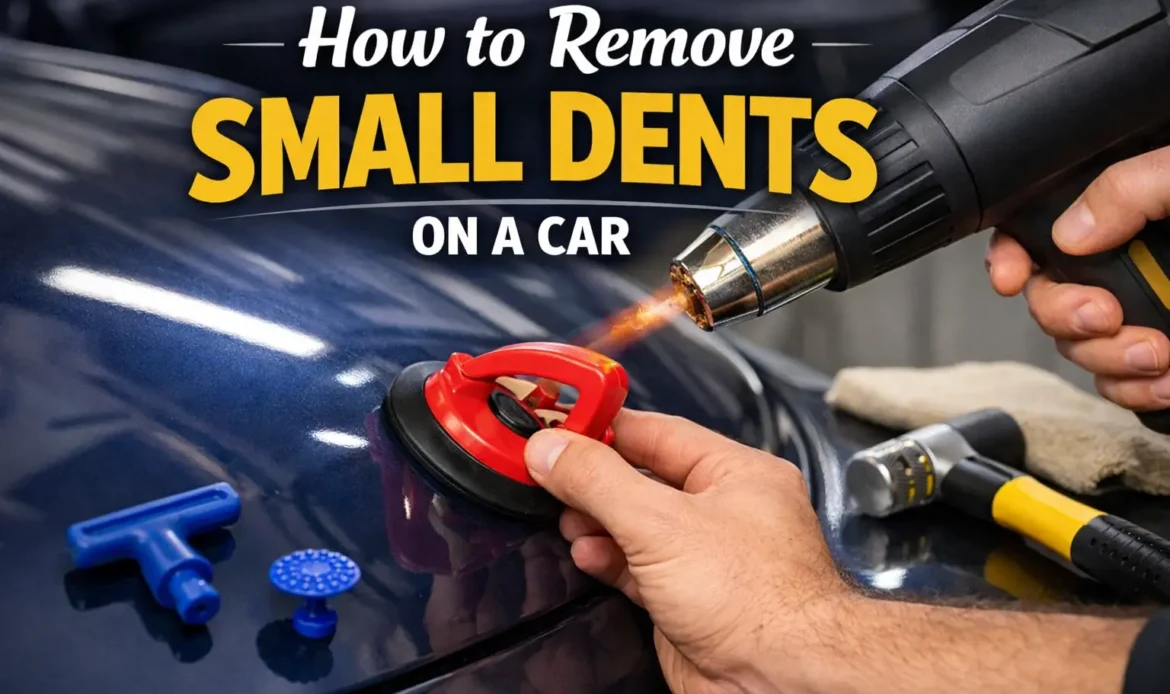
A dent puller provides stronger suction than household tools. These tools attach to the dent and pull the metal outward slowly.
Most dent pullers work best on shallow dents where the paint surface remains intact. Pulling too aggressively can stretch the metal, so gradual pressure is important.
Step-by-Step: How to Remove a Small Dent From a Car
Removing a dent requires patience. Small adjustments often produce better results than trying to force the metal outward quickly.
Clean the Dent Area
Start by washing the dented area with car soap and water. Dirt and debris can interfere with suction tools and may scratch the paint during the repair process.
Dry the panel completely before attempting any dent removal method.
Apply the Dent Removal Method
Choose a method based on the dent location and panel type. Suction tools or dent pullers often work best on shallow dents located on flat metal panels. Apply steady pressure and pull slowly to allow the metal to move gradually.
For plastic bumpers, heating the area with hot water can make the material flexible. Gentle pressure from behind the panel may help push the dent outward. Glue pull dent kits may also help remove small dents by attaching a tab to the dent and pulling it outward gradually.
Check the dent after each attempt. Several small adjustments usually work better than one strong pull.
Check the Panel Shape
Look at the panel from different angles under good lighting. Reflections help reveal whether the dent has improved or if small low spots remain.
Continue adjusting the dent slowly if the panel shape improves.
Polish the Area After Repair
Once the dent looks smoother, polish the area using a mild automotive polish. Polishing restores shine and removes minor marks left during the repair process.
Which Car Panels Are Easier to Fix at Home
Some panels respond better to DIY dent repair than others. Flat panels such as doors and quarter panels often allow the metal to move more freely. Because of this, shallow dents in these areas sometimes improve with suction tools.
Plastic bumpers are also easier to reshape because the material becomes flexible when heated. However, roof panels, hood edges, and areas near body lines are usually harder to repair at home. These areas contain reinforced metal that resists movement.
Why DIY Dent Repair Sometimes Fails
Many DIY dent repairs fail because the dent shape is misunderstood. A dent may look simple from the outside, but the metal could already be stretched or creased. Once the metal stretches, it does not easily return to its original form.
Another common issue is applying too much force. Pulling too aggressively can create a high spot in the panel or make the dent wider. In some cases, improper tools damage the paint, which turns a simple dent repair into a repainting job.
When a Dent Should Be Repaired by a Professional
Certain dents require professional repair from the beginning. Deep dents usually involve stretched metal that cannot return to its original shape with simple suction tools.
Paint damage also signals the need for professional repair. When the paint cracks or chips, the panel may require body work and repainting. Dents located near body lines, panel edges, or structural areas also require specialized tools and experience.
Why Professional Paintless Dent Repair Works Better
Paintless Dent Repair (PDR) offers one of the most effective solutions for many minor dents. Technicians use specialized tools behind the panel to gently massage the metal back into its original shape.
Because this process does not require sanding or repainting, the factory paint remains intact. Maintaining the original paint finish helps protect the vehicle’s resale value and prevents color mismatch.
Experienced technicians also use specialized lighting to detect subtle panel distortions. This allows them to restore the surface smoothly and accurately.
Get Professional Dent Repair Near You
Small dents may look simple, but repairing them incorrectly can create larger problems. Professional technicians evaluate the dent carefully and choose the most effective repair method.
Many minor dents can be repaired quickly using paintless dent repair techniques. This approach preserves the original paint and restores the panel without extensive body work.
If a dent does not respond to home repair methods, visiting an experienced auto body shop can often restore the vehicle’s appearance quickly and safely.
Frequently Asked Questions
Can boiling water remove a car dent?
Hot water can help reshape plastic bumpers because it softens the material. However, boiling water usually does not work on metal panels and should be used carefully to avoid paint damage.
How much does dent repair cost?
The cost depends on the dent size, location, and paint condition. Small dents repaired through paintless dent repair usually cost less than traditional body work, while deeper dents with paint damage may require more extensive repairs.
Can suction cups remove dents?
Suction tools may help reduce shallow dents on flat panels. However, they rarely work on deep dents or dents with sharp creases.
Do small dents affect car value?
Yes. Visible dents can reduce resale value because buyers often associate body damage with poor vehicle care. Repairing dents early helps maintain the vehicle’s appearance and value.
Get Professional Dent Repair Service
Small dents may look simple, but repairing them incorrectly can create larger problems. Professional technicians evaluate the dent carefully and choose the safest repair method based on the panel shape, paint condition, and dent depth.
Shops such as Alpha Collision Center is an auto body shop near Boston, MA. We are specialize in restoring damaged body panels using professional tools and proven repair techniques. Experienced technicians can determine whether paintless dent repair will work or if additional body work is required. This approach helps restore the panel properly while protecting the vehicle’s original finish.
Drivers who want a clean, factory-quality result often find that professional dent repair saves time and prevents further damage.